• Work
  • About
  • Blog
  • Public speaking
  • Press
Menu

Marcela Ospina

Product management, Service design, user research,
  • Work
  • About
  • Blog
  • Public speaking
  • Press
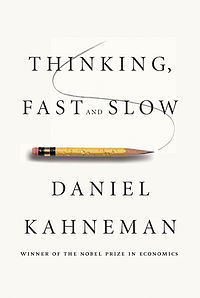
200px-Thinking,_Fast_and_Slow.jpg

Think fast, think slow by Daniel Khaneman

May 26, 2013

Try to answer the following problem:

A bat and a ball cost $1.10 in total. The bat costs $1 more than the ball. How much does the ball cost?

The majority of people answers $o.10 but the correct value is $0.5. In “Think fast, think slow”, Daniel Khaneman, Nobel prize of economics, explains that our incorrect answer to this problem comes from System 1, a metaphor used to explain how our brain works. This “agent” responds to immediate queries and it is geared towards survival and solutions to problems. System 2, however, is the one that should be engaged in addressing tasks that require more analytical skills. In this case, the correct answer: $0.5 could only come from it. This and more practical examples of how our brain works, and how context influences our behaviour can be found on the above-mentioned book. This is a highly recommended read for strategists and all of us who attempt to advise brands how to connect with their customers better.


In Behavioural economics, Daniel Kahneman Tags Behaviour change, Behavioural economics, Marketing and behaviour
← Building habits and changing your behaviourOn Twitter, content upload and shamanism: how can brands improve their social media strategies? →

Latest Posts

Featured
August 10, 2023
Dystopian love and the intricacies of dating in 2023: A story of hope despite its title
August 10, 2023
August 10, 2023
January 15, 2019
10 Transformation Lessons from My 2018
January 15, 2019
January 15, 2019
November 19, 2018
Why helping teams adapt to change is the main design problem and why should leaders care?
November 19, 2018
November 19, 2018
June 3, 2016
Why Hyper Island at 35: The personal side to my career decision
June 3, 2016
June 3, 2016
August 27, 2014
On thick data, and interpreting the meaning of phenomena
August 27, 2014
August 27, 2014
June 6, 2014
Chronicles of fieldwork in Luanda: understanding mobile engagements
June 6, 2014
June 6, 2014
December 17, 2013
Cultural and social trends on digital and mobile 2014
December 17, 2013
December 17, 2013
December 13, 2013
Some personal humble wisdom
December 13, 2013
December 13, 2013
September 26, 2013
The art and science of changing behaviour applied to marketing strategies
September 26, 2013
September 26, 2013
September 3, 2013
Innovation as a social process for effective engagement
September 3, 2013
September 3, 2013